
Miso Soup with Kombu, Bonito Flakes, Wakame, and Silken Tofu Recipe
Introduction
Miso soup is a classic Japanese dish known for its comforting warmth and delicate umami flavor. This simple recipe uses kombu, bonito flakes, and miso paste to create a rich, savory broth perfect for any meal.
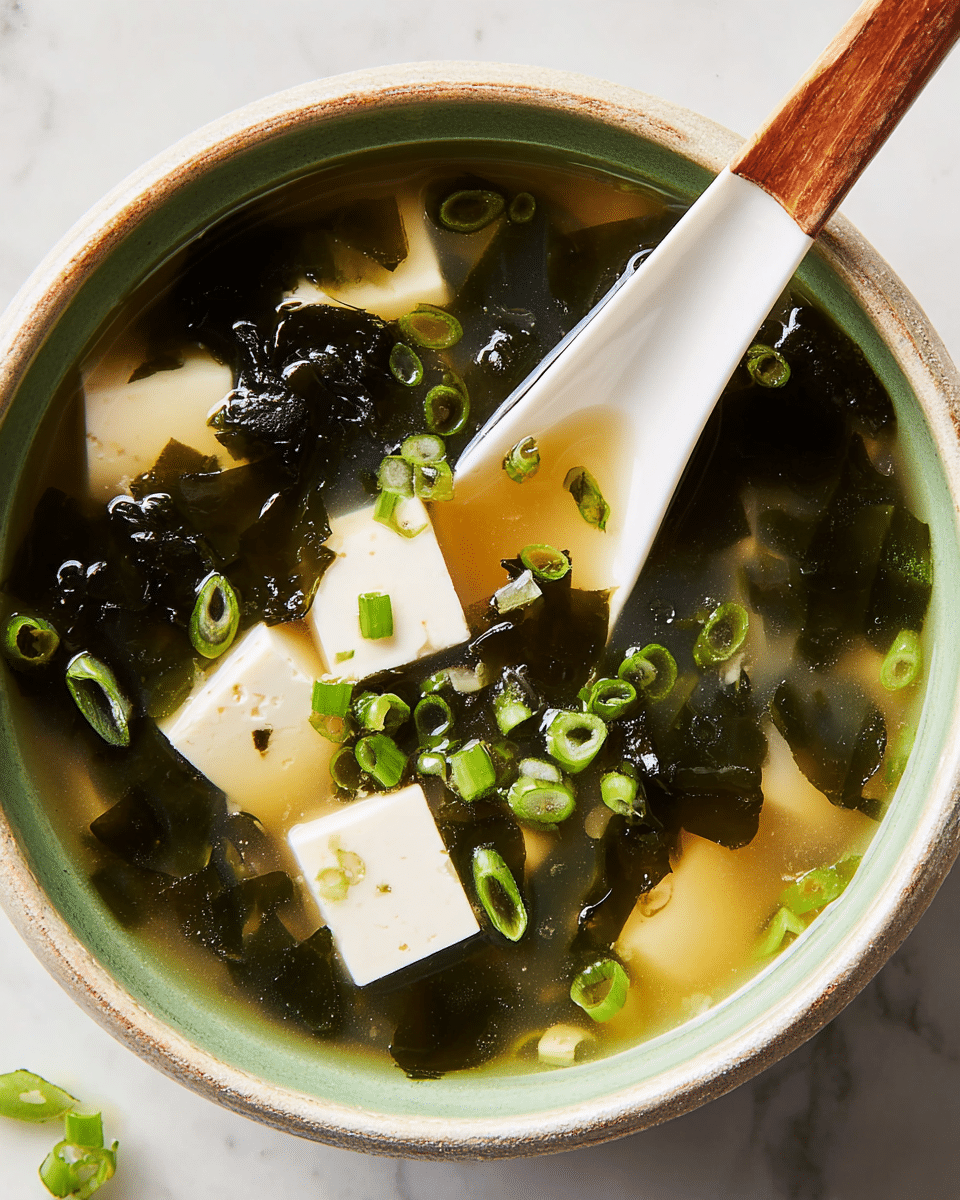
Ingredients
- 1 large piece kombu (about 4″)
- 1 1/2 cups bonito flakes
- 1/3 cup white miso
- 3 Tbsp. sliced scallions
- 2 Tbsp. dried wakame
- 4 oz. silken tofu, cut into 1/2″ cubes
Instructions
- Step 1: In a large pot over medium heat, bring kombu and 6 cups of water to a simmer. Remove the kombu as soon as the water starts to simmer or when an instant-read thermometer registers 150ºF. Bring the stock to a boil and add bonito flakes. Reduce heat to medium-low and simmer for 10 to 15 minutes to infuse the stock. Strain through a fine-mesh sieve into a medium bowl, pressing on the solids to release stock.
- Step 2: Return the strained dashi to the same pot and bring it to a simmer over medium heat. Whisk in the white miso until fully dissolved, then stir in sliced scallions and dried wakame.
- Step 3: Divide the silken tofu cubes among serving bowls. Pour the hot miso soup over the tofu and serve immediately.
Tips & Variations
- Use soft or silken tofu for a smooth texture that complements the delicate broth.
- For a deeper flavor, let the dashi simmer gently without boiling after adding bonito flakes.
- Substitute white miso with red or mixed miso for a stronger, earthier taste.
- Add sliced mushrooms or spinach for extra vegetables and nutrients.
Storage
Store leftover miso soup in an airtight container in the refrigerator for up to 2 days. When reheating, warm gently over low heat without boiling to preserve the miso’s delicate flavor and beneficial probiotics.
How to Serve
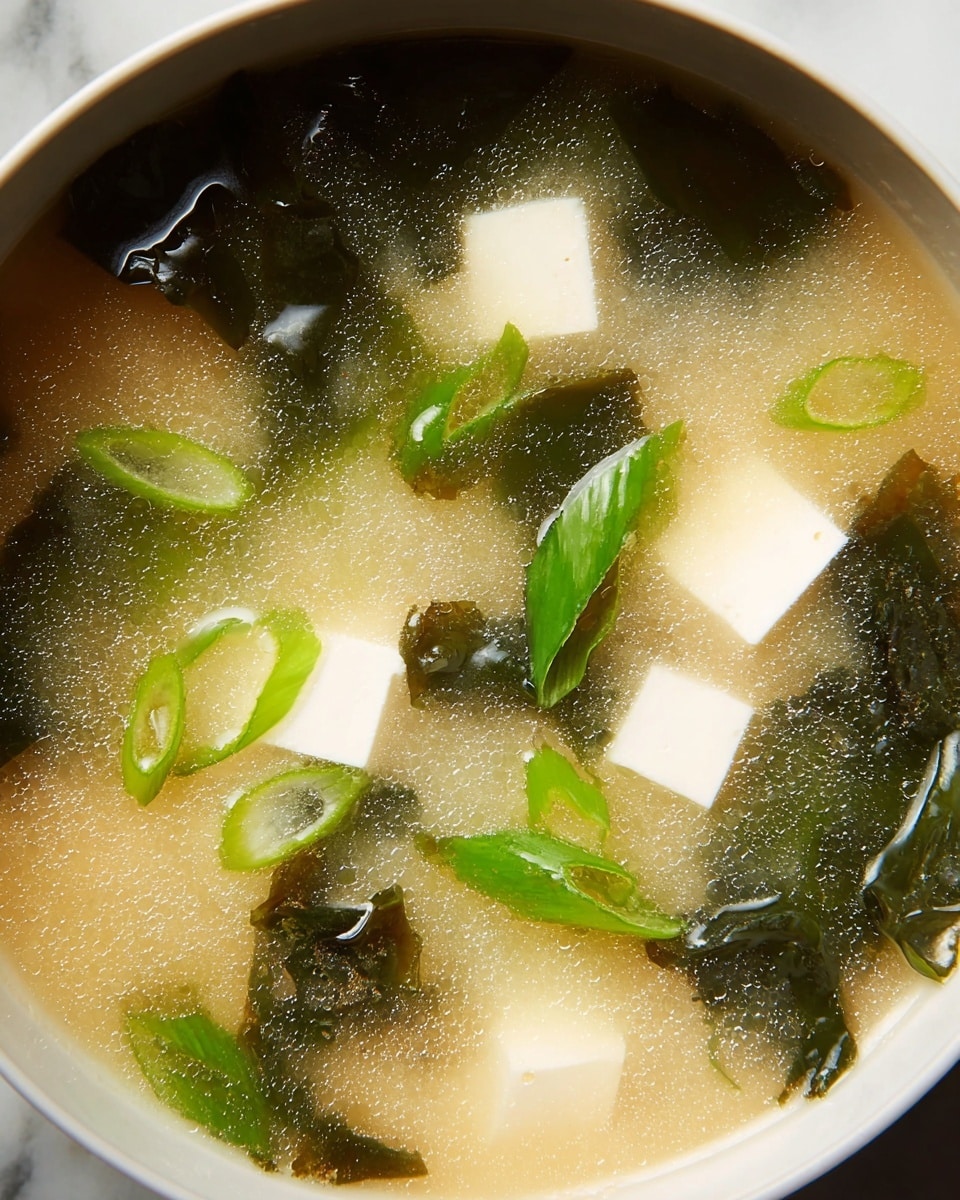
Serve this delicious recipe with your favorite sides.
FAQs
Can I make miso soup without bonito flakes?
Yes, you can make a vegetarian version by omitting bonito flakes and using kombu and dried shiitake mushrooms to create a flavorful dashi broth.
Why should I avoid boiling miso soup after adding miso paste?
Boiling miso can destroy its beneficial enzymes and alter the delicate flavor, so it’s best to add miso at a low heat and avoid bringing the soup back to a boil.
Print
Miso Soup with Kombu, Bonito Flakes, Wakame, and Silken Tofu Recipe
- Total Time: 30 minutes
- Yield: 4 servings 1x
- Diet: Vegetarian
Description
This traditional Japanese Miso Soup features a delicate broth made from kombu and bonito flakes, enriched with white miso, scallions, dried wakame seaweed, and soft silken tofu cubes. It’s a comforting and nutritious starter that’s quick to prepare and embodies authentic umami flavors.
Ingredients
Broth Ingredients
- 1 large piece kombu (about 4 inches)
- 6 cups water
- 1 1/2 cups bonito flakes
Soup Ingredients
- 1/3 cup white miso
- 3 Tbsp sliced scallions
- 2 Tbsp dried wakame
- 4 oz silken tofu, cut into 1/2” cubes
Instructions
- Prepare the broth: In a large pot over medium heat, combine the kombu and 6 cups of water. Warm the mixture until just before simmering—this is when you should remove the kombu, either right as bubbles begin to form or when the liquid reaches 150ºF on an instant-read thermometer. Bring the remaining water to a boil, then add the bonito flakes.
- Simmer and strain stock: Lower the heat to medium-low and allow the mixture to gently simmer for 10 to 15 minutes to infuse the flavors. After simmering, strain the stock through a fine-mesh sieve into a medium bowl, pressing the solids to extract maximum flavor.
- Combine miso and soup ingredients: Return the strained dashi stock to the pot and heat it over medium until it reaches a gentle simmer. Whisk in the white miso paste thoroughly until fully dissolved. Stir in sliced scallions and dried wakame seaweed to rehydrate and blend with the stock.
- Serve with tofu: Distribute the cubed silken tofu evenly among serving bowls. Pour the hot miso soup over the tofu gently to avoid breaking the delicate cubes. Serve immediately.
Notes
- Do not boil the kombu; removing it before boiling prevents bitterness and maintains a clean broth.
- Use a fine-mesh sieve to ensure a clear, smooth dashi stock.
- Silken tofu is delicate; handle gently when cutting and serving.
- Dried wakame will expand when soaked in hot broth; adjust amount if you prefer less seaweed.
- This soup is best enjoyed fresh but can be reheated gently on the stovetop without boiling.
- Prep Time: 10 minutes
- Cook Time: 20 minutes
- Category: Soup
- Method: Stovetop
- Cuisine: Japanese
Keywords: miso soup, Japanese soup, vegetarian soup, dashi broth, kombu, bonito flakes, tofu soup, traditional Japanese recipe