Sheet Pan Bibimbap Recipe
Introduction
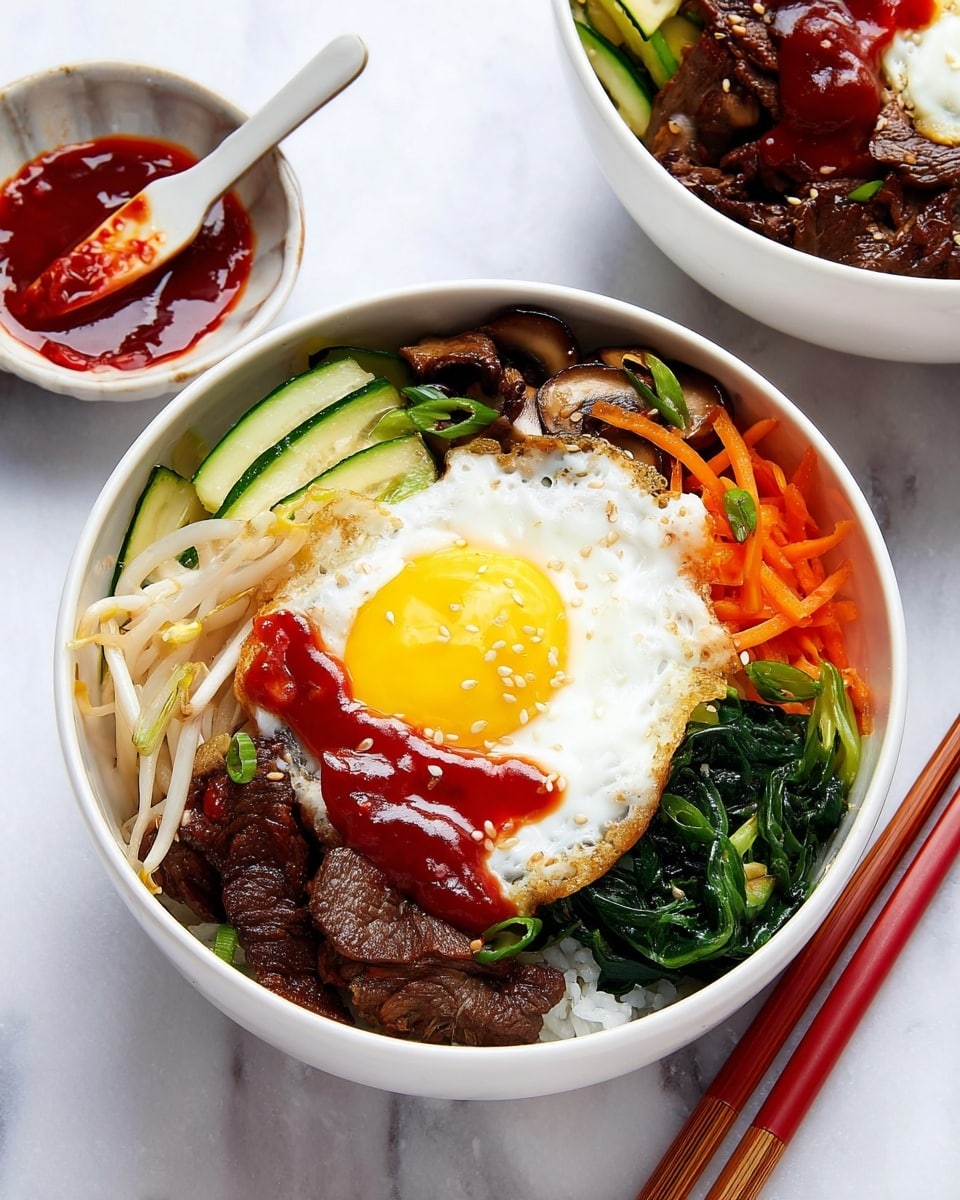
Sheet Pan Bibimbap offers a vibrant and flavorful take on the classic Korean rice bowl, all prepared on a single pan for easy cooking and clean-up. This recipe combines tender marinated beef, roasted vegetables, and crisp-seasoned greens, topped with a perfectly cooked egg and a savory gochujang sauce.
Ingredients
- 1/2 lb. bean sprouts
- 1 bunch spinach
- 2 1/2 tbsp. sesame oil (divided)
- 3 cloves garlic, minced (divided)
- 1/2 tbsp. sesame seeds (divided)
- 1/2 tsp. kosher salt
- 2 tbsp. gochujang
- 1 tbsp. rice vinegar
- 1 tbsp. soy sauce (plus 1/4 cup for beef marinade)
- 1 tbsp. brown sugar (divided)
- 1 large carrot, julienned
- 1 medium zucchini, halved and sliced into half-moons
- 1/2 lb. shiitake mushrooms, sliced
- Vegetable or canola oil
- Kosher salt and freshly ground black pepper
- 1/2 tbsp. grated ginger
- 1 lb. ribeye or short rib, thinly sliced
- 4 large eggs
- Cooked rice, for serving
Instructions
- Step 1: Prepare banchan (seasoned vegetables). Bring 6 cups of salted water to a boil in a large pot. Prepare a large ice bath in a bowl. Blanch the bean sprouts for 1 to 2 minutes until just cooked, then remove with tongs and immediately shock in the ice bath. Drain and set aside. Repeat the same process for the spinach, then roughly chop once cooled.
- Step 2: In a small bowl, mix 2 1/2 tablespoons sesame oil, 2 cloves minced garlic, 1/2 tablespoon sesame seeds, and 1/2 teaspoon kosher salt. Divide the sauce evenly between the bean sprouts and spinach, tossing each to coat well. Set aside.
- Step 3: For the bibimbap sauce, whisk together gochujang, rice vinegar, 1 tablespoon sesame oil, 1 tablespoon soy sauce, 1 clove minced garlic, 1 teaspoon sesame seeds, and 1 tablespoon brown sugar in a small bowl. Set aside to allow flavors to meld.
- Step 4: Preheat oven to 400ºF (200ºC). In a medium bowl, toss the carrot, zucchini, and shiitake mushrooms separately with just enough vegetable oil to coat, then season with salt and pepper. Arrange each vegetable in its own quadrant on a sheet pan ensuring good contact with the pan surface.
- Step 5: Wipe out the medium bowl, then whisk together 1/4 cup soy sauce, 1 tablespoon sesame oil, 2 cloves minced garlic, grated ginger, remaining brown sugar, a pinch of kosher salt, and several grinds of black pepper. Add the sliced beef and toss until fully coated in the marinade.
- Step 6: Add the marinated beef to the sheet pan alongside the vegetables. Roast everything in the oven for 30 minutes, tossing each section halfway through, until the beef is cooked through and the vegetables start to brown.
- Step 7: While the sheet pan is finishing, heat 1 tablespoon of vegetable oil in a nonstick pan over medium heat. Crack the eggs into the pan and cook until the whites are set but yolks remain runny, about 3-4 minutes.
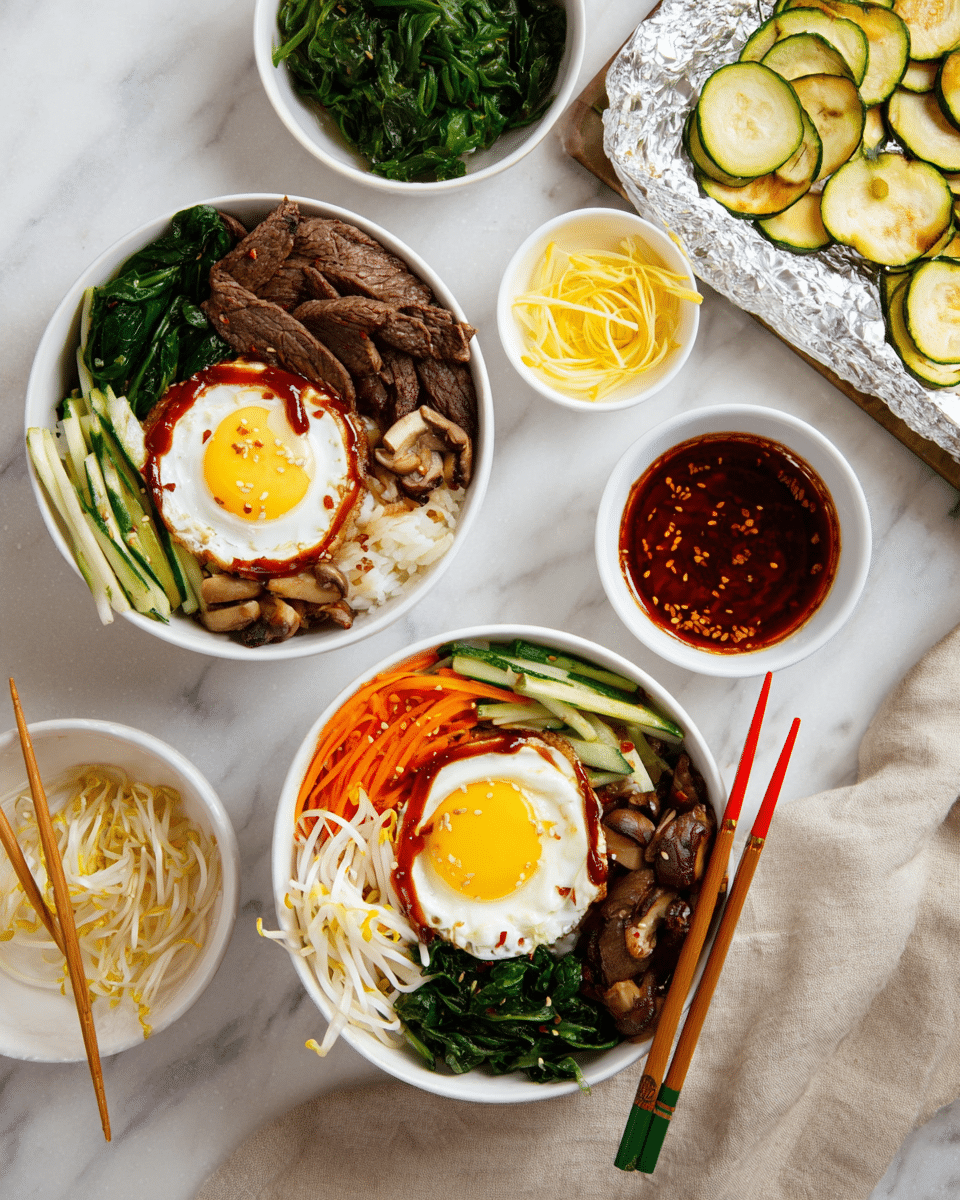
- Step 8: To serve, place cooked rice in bowls. Top each with one fried egg, then artfully arrange the roasted carrots, zucchini, mushrooms, beef, spinach, and bean sprouts around the egg yolk. Serve with the prepared bibimbap sauce on the side for drizzling.
Tips & Variations
- For a vegetarian version, omit the beef and add extra mushrooms or tofu marinated in the soy-ginger sauce.
- Use a rimmed baking sheet to avoid any juices spilling over during roasting.
- Adjust the gochujang sauce to taste if you prefer it spicier or milder.
- Leftover roasted vegetables and beef make excellent additions to salads or wraps.
Storage
Store any leftover components separately in airtight containers in the refrigerator for up to 3 days. Reheat the roasted vegetables and beef gently in a skillet or oven, and fry fresh eggs when ready to serve. The rice can be reheated in the microwave with a sprinkle of water to keep it moist.
How to Serve
Serve this delicious recipe with your favorite sides.
FAQs
Can I use other cuts of beef for this recipe?
Yes, you can use other thinly sliced cuts like sirloin or flank steak. Make sure the slices are thin for quick cooking on the sheet pan.
What can I substitute for gochujang if I don’t have it?
You can use a mix of miso paste with a bit of chili powder and a touch of honey or brown sugar to mimic the sweet and spicy flavors of gochujang, though the taste will be slightly different.
Print
Sheet Pan Bibimbap Recipe
- Total Time: 1 hour
- Yield: 4 servings 1x
Description
Sheet Pan Bibimbap is a vibrant Korean-inspired dish featuring oven-roasted vegetables and marinated beef, served over steamed rice with a perfectly fried egg on top. This one-pan meal combines tender ribeye, seasoned bean sprouts and spinach, and a flavorful homemade bibimbap sauce, making it an easy yet authentic and satisfying dinner.
Ingredients
Banchan (Side Vegetables)
- 1/2 lb. bean sprouts
- 1 bunch spinach
- 2 1/2 tbsp. sesame oil, divided
- 3 cloves garlic, minced (2 for sauce, 1 for bibimbap sauce)
- 1/2 tbsp. sesame seeds, plus 1 tsp.
- 1/2 tsp. kosher salt
Bibimbap Sauce
- 2 tbsp. gochujang
- 1 tbsp. rice vinegar
- 1 tbsp. sesame oil
- 1 tbsp. soy sauce
- 1 clove garlic, minced
- 1 tsp. sesame seeds
- 1 tbsp. brown sugar
Vegetables for Roasting
- 1 large carrot, julienned
- 1 medium zucchini, halved and sliced into half-moons
- 1/2 lb. shiitake mushrooms, sliced
- Vegetable or canola oil, for tossing
- Kosher salt, to taste
- Freshly ground black pepper, to taste
Beef Marinade and Protein
- 1/4 cup soy sauce
- 2 cloves garlic, minced
- 1/2 tbsp. grated ginger
- 1 tbsp. sesame oil
- 1 tbsp. brown sugar
- Pinch of kosher salt
- 7–8 grinds of freshly ground black pepper
- 1 lb. ribeye or short rib, thinly sliced
Additional Ingredients
- 4 large eggs
- Cooked rice, for serving
- 1 tbsp. vegetable or canola oil (for frying eggs)
Instructions
- Prepare Banchan (Blanching Vegetables): Bring 6 cups of salted water to boil in a large pot. Prepare a large bowl of ice water for an ice bath. Add bean sprouts to boiling water, blanch for 1-2 minutes until just cooked, then remove with a spider or tongs and immediately transfer to ice bath to stop cooking. Drain thoroughly and set aside. Repeat this blanching process for the spinach, then roughly chop the spinach once cooled.
- Season Blanched Vegetables: In a small bowl, combine 2 1/2 tablespoons sesame oil, 2 cloves minced garlic, 1/2 tablespoon sesame seeds, and 1/2 teaspoon kosher salt. Divide the sauce in half. Place bean sprouts in one bowl and toss with half the sauce. Do the same with the spinach in another bowl. Toss well to coat each vegetable evenly and set aside.
- Make Bibimbap Sauce: In a separate small bowl, whisk together 2 tablespoons gochujang, 1 tablespoon rice vinegar, 1 tablespoon sesame oil, 1 tablespoon soy sauce, 1 clove minced garlic, 1 teaspoon sesame seeds, and 1 tablespoon brown sugar until smooth. Set aside to allow flavors to meld.
- Prepare Vegetables for Roasting: Preheat your oven to 400°F (200°C). In a medium bowl, toss julienned carrot, sliced zucchini, and shiitake mushrooms each separately with just enough vegetable or canola oil to lightly coat them. Season each with kosher salt and freshly ground black pepper to taste. On a sheet pan, arrange these vegetables in separate quadrants ensuring they have direct contact with the pan for proper roasting.
- Marinate Beef: Wipe out your mixing bowl, then whisk together 1/4 cup soy sauce, 1 tablespoon sesame oil, 2 cloves minced garlic, 1/2 tablespoon grated ginger, 1 tablespoon brown sugar, a pinch of kosher salt, and 7-8 grinds of black pepper. Add the thinly sliced ribeye or short rib to this marinade, tossing thoroughly to coat all pieces evenly.
- Roast Beef and Vegetables: Add the marinated beef to the sheet pan alongside the vegetables or mix in after planning the quadrants if preferred. Place the sheet pan in the preheated oven and roast for 30 minutes, tossing each quadrant halfway through cooking. The beef should be cooked through and the vegetables nicely browned.
- Fry Eggs: Just before removing the pan from the oven, heat 1 tablespoon of vegetable or canola oil in a nonstick skillet over medium heat. Crack the eggs into the pan and cook until the whites are set but the yolks remain runny, about 2-3 minutes.
- Assemble Bibimbap Bowls: Spoon cooked rice into four bowls. Top each bowl with one fried egg. Arrange the roasted carrot, zucchini, shiitake mushrooms, cooked beef, seasoned spinach, and bean sprouts around the egg yolk. Serve each bowl with a drizzle or side of the prepared bibimbap sauce and enjoy immediately.
Notes
- You can substitute short rib for ribeye for a more traditional flavor and texture.
- Feel free to add other vegetables like sliced bell peppers or mushrooms based on preference and seasonality.
- If you prefer a fully cooked egg yolk, cook the eggs longer or scramble them.
- Adjust gochujang quantity in the sauce to your spice preference.
- Use fresh ginger for best flavor in the marinade.
- This recipe can be adapted to use instant pot or stovetop for cooking beef, but roasting maximizes flavor and texture.
- Leftover bibimbap ingredients can be stored separately in airtight containers for up to 3 days.
- Prep Time: 25 minutes
- Cook Time: 35 minutes
- Category: Main Dish
- Method: Roasting
- Cuisine: Korean
Keywords: bibimbap, sheet pan meals, Korean recipes, roasted vegetables, beef bibimbap, gochujang, one pan dinner, easy Korean recipe